
Rutendo Nyeve,
ZIMBABWE is making significant strides in advancing solar technology adoption while championing energy efficiency initiatives, including the replacement of conventional lighting with LED systems in major hospitals.
This comes as the country is positioning itself as a regional leader in renewable energy adoption in line with its transformative Vision 2030 targets.
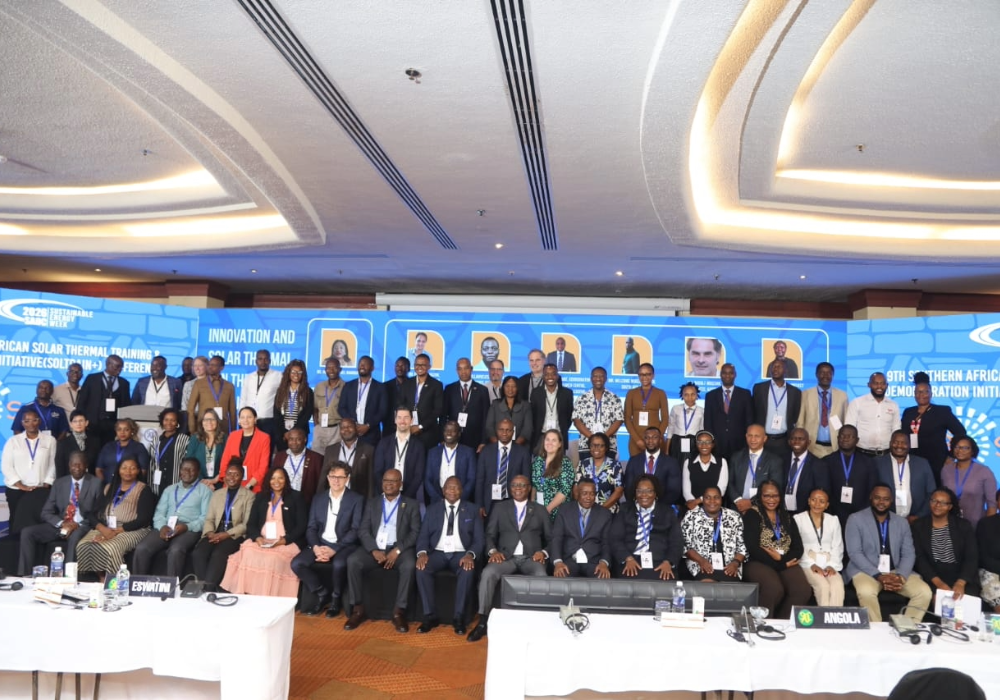
Deputy Minister of Energy and Power Development, Yeukai Simbanegavi, outlined the milestones during the 9th Southern African Solar Thermal Training and Demonstration Initiative (Soltrain) Conference, which was held as part of the SADC Sustainable Energy Week in Victoria Falls yesterday.
The conference follows a successful similar event held in Harare in November 2021. In 2025, Soltrain hosted the 8th conference in Botswana, where Zimbabwe was passed the baton to host this year’s event.
“Since the last conference, the Government of Zimbabwe has made significant strides in advancing solar thermal technologies,” said Deputy Minister Simbanegavi.
“Zimbabwe signed the Solar Thermal Technology Platform and Implementation Plan, reaffirming our commitment to reducing climate change impacts and expanding access to clean, sustainable energy.
“This was a follow-up to the National Solar Water Heating programme launched in 2015, which aimed to save energy of about 300 MW of power, through the adoption and retrofitting of solar water heaters.”
Deputy Minister Simbanegavi said that through domestic and industrial solar geysers, Zimbabwe expects a significant drop in demand from the national grid in homes, hotels and other business premises.
Last year, the Government launched the National Energy Efficiency Policy (Neep), further strengthening the country’s commitment to energy access and the achievement of its Nationally Determined Contributions under the global climate framework.
Through collaboration with partners such as the United Nations Environment Programme (Unep), UNDP, and the SADC Centre for Renewable Energy and Energy Efficiency (Sacreee), Zimbabwe has championed Minimum Energy Performance Standards (Meps).
“These Meps are focusing on refrigeration, motors and lighting and have been widely adopted by industry and the domestic sector. Zimbabwe is also actively participating in the Energy Efficient Lighting and Appliances (EELA),” she said.
Over the past 13 years, the Government has worked closely with the Soltrain project, implemented locally by the National University of Science and Technology (Nust), one of the leading academic institutions in Zimbabwe.
Through this collaboration, Zimbabwe has supported the global Heat Worldwide survey and promoted local manufacturing and assembly of solar water heating systems by companies such as Monarch Steel, Capri and Telco, among others.
The Government has also strengthened the regulatory framework through Statutory Instrument 235 of 2019 — Electricity (Solar Water Heating) Regulations.
These regulations govern the installation, licensing, operation, maintenance, and upgrading of solar water heating systems in Zimbabwe.
Importantly, Deputy Minister Simbanegavi said the Government mandates that all new buildings install solar water heating systems and discourage the use of conventional electric geysers.
These measures were developed in consultation with the Zimbabwe Energy Regulatory Authority (Zera) and form part of the broader renewable energy strategy.
Additionally, through Zera and with support from development partners, the Government has overseen energy efficiency initiatives including the replacement of conventional lighting with LED systems in major hospitals, as well as the installation of solar hot water systems at Gweru Provincial Hospital.
“These initiatives demonstrate the Government’s full support for the Solar Thermal Heating and Cooling Demonstration Initiative,” she said
Speaking at the same event, the Vice-Chancellor of the National University of Science and Technology, Professor Mqhele Dlodlo, highlighted the institution’s numerous contributions towards renewable energy and economic growth.
Since 2013, Nust has been a proud partner in the Soltrain initiative.
Through its successive phases, culminating in the current SOLTRAIN programme, the university has worked tirelessly to advance solar thermal technologies and their transformative potential across the SADC region.
Prof Dlodlo revealed that NUST has capacitated over 800 Zimbabwe Electricity Supply Authority (ZESA) technicians nationwide with expertise in electrification, solar installations and energy management.
“As a leader in STEM-oriented human capital development, NUST is enhancing skills for students and professionals while strengthening community engagement.
“We have capacitated over 800 Zimbabwe Electricity Supply Authority (ZESA) technicians nationwide with expertise in electrification, solar installations and energy management,” said Prof Dlodlo.
He emphasised that the conference theme: “From demonstration to scale: Solar heating and cooling for competitiveness and resilient communities”, resonates deeply with NUST’s mission.
“We are committed to driving innovation and sustainability, embedding renewable energy research into the very fabric of our institution. Across our faculties, from the Built Environment to Applied Sciences, Environmental Science, and Engineering, we are equipping students with the skills to lead in clean energy technologies,” he said.
Prof Dlodlo highlighted that interdisciplinary collaboration is at the heart of NUST’s approach, ensuring that projects such as Net Zero Building design and energy efficiency are not isolated efforts but part of a holistic vision for climate action.
The university’s collaboration with the Environmental Management Agency, supported by the Internet Society Foundation, is advancing research on electronic waste management, renewable energy in IT and digitalised energy education.
Looking ahead, Prof Dlodlo revealed that NUST is preparing to establish a 5 MW Solar PV Farm at its Bulawayo campus, and welcomes partnerships with independent power producers to realise this vision.
“A powerful enabler of this transformation is Artificial Intelligence (AI). AI is revolutionising solar thermal technologies, optimising system design, enabling predictive maintenance and facilitating smart grid integration,” he said.
“At NUST, we are advancing applied research and prototyping with AI integration, forging strategic partnerships with industry, policymakers and international institutions.”
These initiatives align with Zimbabwe’s National Development Strategy 2 (NDS 2), which identifies renewable energy as a cornerstone of industrialisation and economic growth.
They also align with the global commitment to Sustainable Development Goal 7 (SDG 7) of ensuring access to affordable, reliable, sustainable and modern energy for all.
Source: The Herald Online