Zimpapers Writer
ONE of Zimbabwe’s emerging poultry enterprises, Uhuru Chickens, is helping close the gap between classroom learning and practical agricultural experience by exposing university students to real-world broiler chicken production.
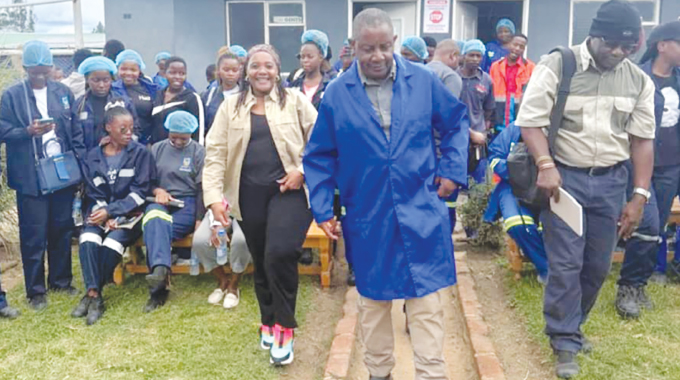
Located in Arcturus, just outside Harare, the poultry farm recently hosted 75 students from the Faculty of Agricultural Sciences and Technology at the National University of Science and Technology (Nust) as part of a learning tour designed to equip them with hands-on skills in commercial poultry production. The students were led by Dr Tryphine Dube.
During the visit, students were taken through the various stages of broiler production, including brooding, feed management, poultry housing systems, disease control and the business considerations involved in running a poultry enterprise. They were guided through the entire production cycle by the farm’s production manager, Enerst Nyamasoka, who explained the practical processes required to manage a commercial broiler operation.
The farm operates at a significant scale, producing around 100 000 broiler chickens per production cycle, giving students a rare opportunity to observe the management of a large-scale poultry enterprise.
Founder and director Edith Maziofa Tapfuma said the initiative was developed to ensure agriculture students graduate with practical knowledge that can help them succeed in agribusiness. Tapfuma, who has served as a Nust councillor since 2024, emphasised the importance of exposing learners to real farming environments.
“We realised that many students learn the theory of agriculture in lecture rooms but have limited exposure to the practical side of farming. By opening our farm to students, we want them to see how poultry production works on the ground, from brooding day-old chicks to managing feed and preparing birds for the market,” Tapfuma said.
Uhuru Chickens was founded in 2023 by Tapfuma and her husband, Caleb Tapfuma, as part of a broader vision to build a sustainable agribusiness while contributing to skills development within the agricultural sector.
Tapfuma said poultry farming presents significant opportunities for young entrepreneurs — provided they understand the full value chain involved in production.
“Poultry farming is not just about raising chickens. It involves proper planning, feed management, biosecurity, marketing and understanding the entire value chain. If young people understand these processes, they can start viable businesses and contribute to the country’s food production,” she said.
The training initiative exposes students to the complete poultry production cycle, allowing them to observe how chicks are managed during brooding, how feed is organised and administered, and how production costs affect profitability.
Tapfuma added that understanding the value chain is essential for anyone intending to venture into poultry farming.
“Students need to understand how the business side works, the cost of feed, the market for broilers, and how to manage risks such as disease outbreaks. These are the realities farmers deal with daily.”
For the students, the tour offered a valuable opportunity to experience commercial poultry farming beyond the classroom. Dube emphasised the importance of such industry visits in strengthening agricultural education.
“Experiential learning is an important component of agricultural training. Students need to see how theory translates into practice. Visits to farms like Uhuru Chickens give them exposure to real production systems and modern poultry management practices,” said Dube.
Dube further noted that partnerships between universities and industry players help equip students for careers in agriculture and agribusiness.
“Collaboration with private sector players helps bridge the gap between academia and industry. It also exposes students to entrepreneurial opportunities within agriculture,” she said.
Students who took part in the tour said the experience helped deepen their understanding of broiler production and the realities of managing a poultry enterprise. One student explained that seeing the processes firsthand provided context that classroom lessons alone could not offer.
“We learn about poultry production in class, but seeing the actual processes on the farm makes a big difference,” the student said. “It helped us understand issues such as feed management, biosecurity and how farmers manage large flocks.”
Another student said the visit had inspired some learners to consider poultry farming as a business venture after graduation.
“The tour showed us that poultry farming can be a profitable enterprise if it is managed properly,” the student said. “It also made us realise the importance of understanding the entire value chain.”
Zimbabwe’s poultry sector has grown significantly over the years, with chicken meat becoming one of the country’s most widely consumed sources of protein. Industry stakeholders believe that empowering young people with practical farming skills will help sustain the sector while strengthening food security.
For Tapfuma, initiatives that bring students closer to the realities of farming are crucial for developing the next generation of agricultural entrepreneurs.
“Agriculture offers huge opportunities for young people,” she said. “If students gain practical knowledge and confidence while they are still at university, they can graduate ready to create businesses and jobs within the sector.”