
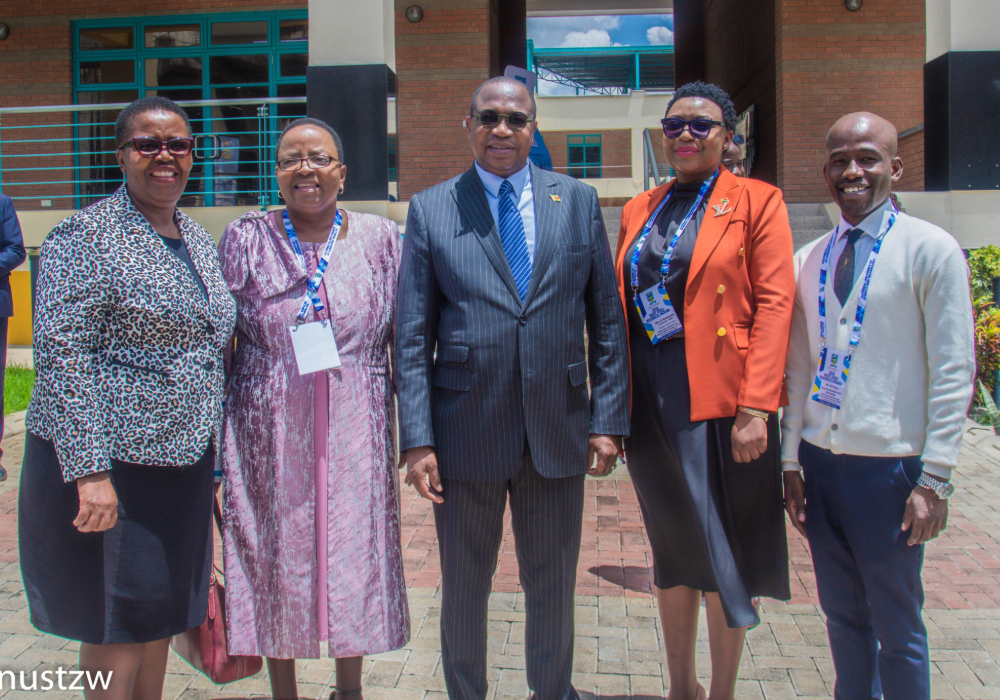
BULAWAYO – Finance, Economic Development, and Investment Promotion Minister, Professor Mthuli Ncube, has described the upcoming 2026 National Budget as a decisive turning point for Zimbabwe, marking a strategic shift from macroeconomic stabilisation to accelerated, knowledge-driven growth.
Delivering a keynote address on Monday at the Graduate School of Business Sciences (GSBS) Indaba, hosted by the National University of Science and Technology (NUST), Prof. Ncube outlined how the 2026 fiscal framework will serve as the engine for National Development Strategy 2 (NDS2).
“Today’s engagement provides an important platform for dialogue between Government, academia and the next generation of economic leaders,” Prof. Ncube remarked, noting that the forthcoming strategy is designed to drive the country toward becoming a “Prosperous and Empowered Upper-Middle-Income Society by 2030.”
The Minister emphasised that building on the successes of NDS1, the second phase aims to foster inclusive, private sector-led growth. “NDS2 aims to elevate productivity and diversify our industries to create broad-based employment and decent incomes,” he stated.
To anchor this transition, the Government intends to expand STEM education and technical vocational training nationwide. Prof. Ncube revealed ambitious digital targets, including achieving a 95% digital literacy rate and allocating at least 1% of GDP to research and development. “Strategically, Government will establish innovation hubs and industrial parks within tertiary institutions and develop capacities in artificial intelligence,” he added.
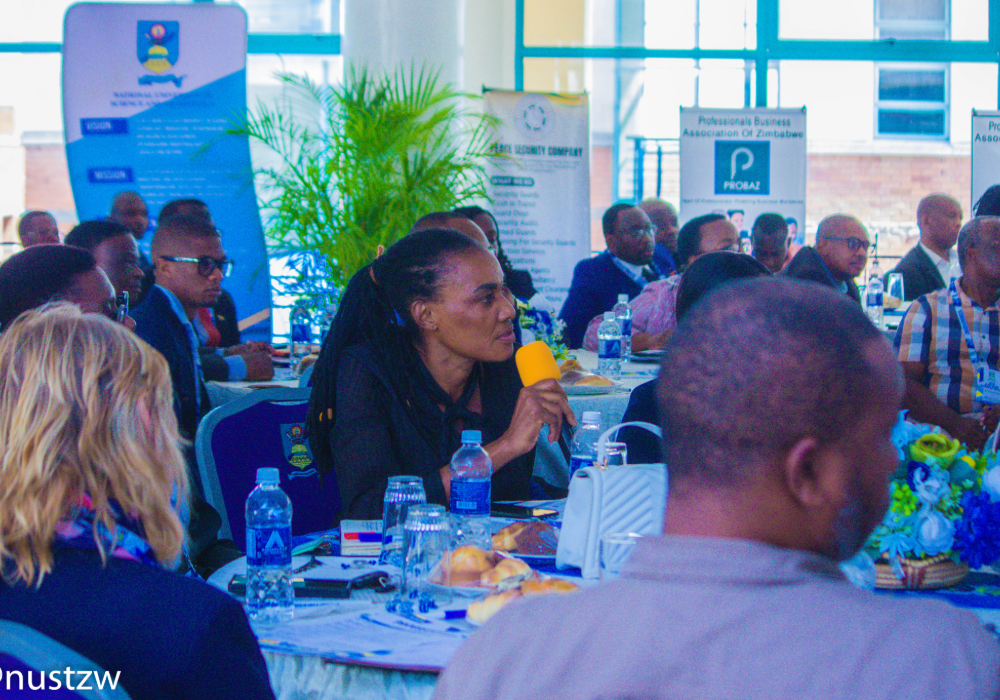
NUST Council Chairperson, Professor Lindiwe Majele Sibanda, echoed this vision, asserting that for Zimbabwe to achieve its goals, universities must evolve. “Universities cannot remain knowledge repositories. We must become innovation accelerators, skills transformation hubs, industry problem-solvers, and policy thought partners,” she said.
Prof. Sibanda noted that this indaba followed a strategic recalibration at the Chinhoyi Council Retreat in January 2026, where the university resolved to move governance from mere compliance to measurable impact. “Alignment with the National Budget must begin internally. A university that seeks national impact must demonstrate institutional coherence and financial discipline,” she maintained.
Director of the GSBS, Professor G.V. Nani, highlighted the practical necessity of the partnership, quoting former UN Secretary-General Kofi Annan: “Knowledge is power. Information is liberating. Education is the premise of progress in every society.”
Prof. Nani reminded delegates that while a budget is a plan expressed in numbers, “its success is expressed in the lives it changes.” She reaffirmed the Business School’s commitment to producing leaders capable of interpreting policy and responding to economic shifts, stating, “Neither industry nor academia can achieve national transformation alone.”
The indaba concluded with a consensus that the 2026 National Budget must not merely be a fiscal document, but a structural blueprint for an economy where, in the Minister’s words, “no one and no place is left behind.”
The Business Indaba marks one of many nationally aligned meetings NUST has planned for the year to ensure that the institution is not just a repository of knowledge and research but also a dynamic catalyst for innovation, industry collaboration, and socio-economic transformation.
By convening thought leaders, policymakers, and business stakeholders, NUST positions itself as an active participant in shaping national development agendas, bridging the gap between academia and practice, and fostering solutions that directly impact communities and industries.