
How One Zoo Placement Shaped a Career in Conservation
NUST Alumni Spotlight
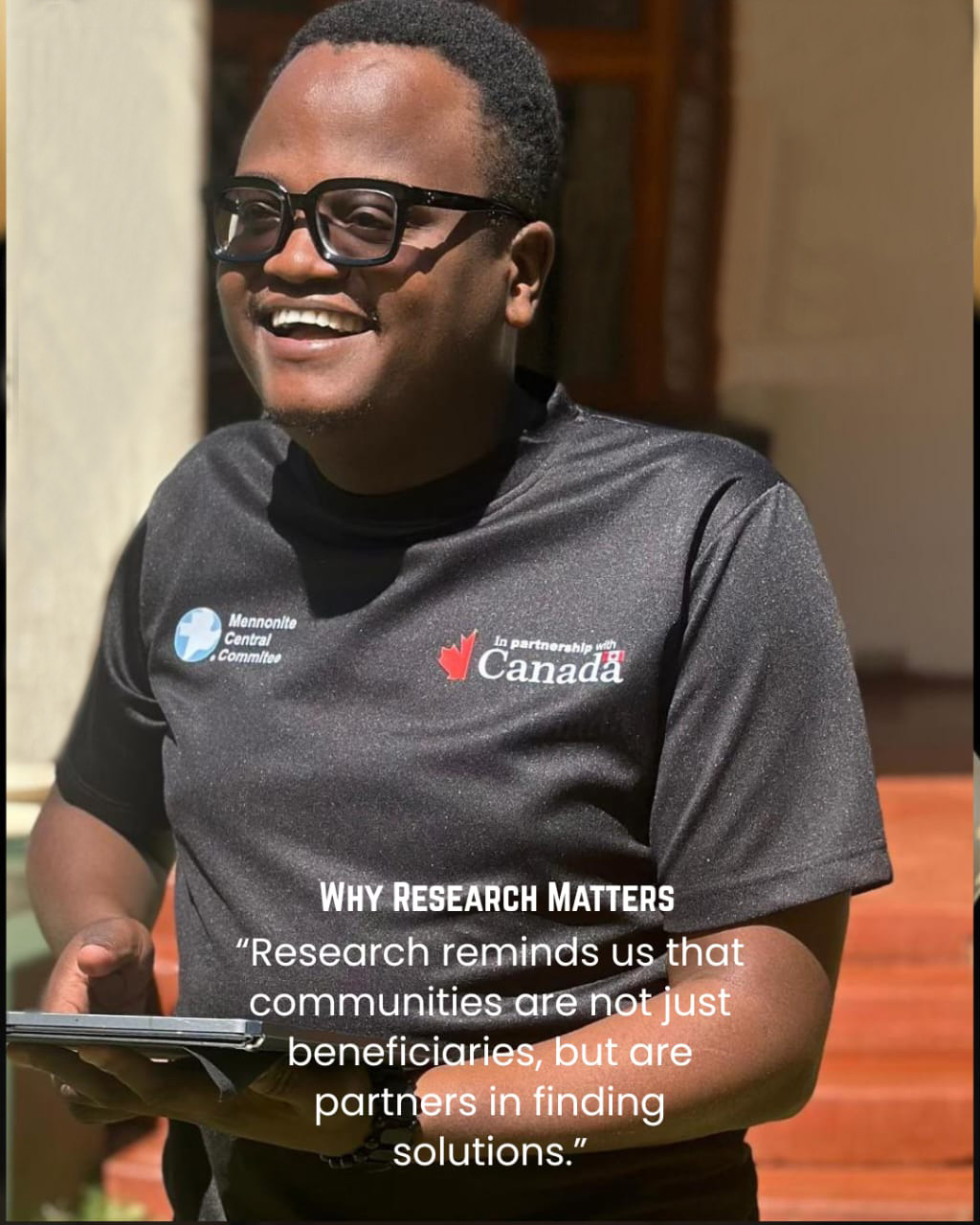 \Bulisani Mlotshwa is the Learning and Research Hub Coordinator for the Locally Led Indigenous Nature-based Solutions for Climate Change Adaptation in Zimbabwe (LINCZ) project, run by Mennonite Central Committee (MCC) Zimbabwe. He holds a Bachelor of Science Honours in Forest Resources and Wildlife Management (2015) and a Master of Science in Biodiversity Conservation and Ecotourism (2020), both from the National University of Science and Technology (NUST)
An industrial attachment at a zoo in Pretoria, South Africa, was meant to last just a year. For Bulisani Mlotshwa, however, it became the starting point of a career that has taken him from rhino enclosures to rural wards in Matabeleland North’s Lupane District, university lecture halls and, most recently, a C$15 million climate adaptation programme linking researchers across two countries.
Along the way, he received a United States Agency for International Development (USAID) award, supervised eleven student dissertations and revisited an undergraduate thesis he completed in 2014, developing it into a manuscript now under review by an international journal. His journey has been anything but linear, shaped by opportunities, unexpected turns and a willingness to keep learning along the way.
In conversation with NUST Alumni Relations Manager Makhosi Sibanda (MS), Bulisani Mlotshwa (BM) looks back on the experiences that have shaped his professional journey.
He reflects candidly on the opportunities that opened doors, the challenges that pushed him beyond the career path he had initially imagined, and the lessons he has carried from one stage of his journey to the next. At the heart of his story is a belief in the value of practical exposure, continuous learning and remaining open to opportunities, even when they do not fit neatly into an original career plan.
For current NUST students and recent graduates, his experience offers a reminder that careers rarely follow a straight line. Sometimes, an opportunity that appears to be simply another requirement on the academic journey can become the defining experience that shapes everything that follows.
MS: Your career has covered a lot of ground since NUST. How would you describe the journey?
BM: My journey with NUST actually started before I graduated. While completing my BSc Hons in Forest Resources and Wildlife Management, I secured an attachment placement at the National Zoological Gardens of South Africa in Pretoria, where I spent a year, from 2013 to 2014, rotating through the Antelope, Carnivore, Research and Hospitality sections as a Trainee Conservator. That single placement gave me the observational data behind my undergraduate thesis on the behavioural impacts of dehorning on captive Black and White Rhinoceroses, a piece of work that, more than a decade later, has now been developed into a manuscript under review by the journal Pachyderm. From there, I returned to NUST, first completing my degree in 2015 and then coming back as a Teaching Assistant in the Department of Forest Resources and Wildlife Management from 2018 to 2020, the same period in which I completed my MSc in Biodiversity Conservation and Ecotourism. In 2021, I moved into large-scale field implementation as a Technical Natural Resources Management Field Officer with the Organisation of Rural Associations for Progress (ORAP) on the USAID-funded US$75 million Amalima Loko resilience programme, designing ecological monitoring systems across 30 wards and more than 15,000 farming households in Lupane District. That work earned me USAID’s SCALE Facilitator of the Year award in 2021. From December 2023, I took on a lecturing post at Lupane State University, teaching six undergraduate modules in natural resources and wildlife management while remaining active in the field. Since May 2024, I have coordinated the Learning and Research Hub for MCC’s LINCZ project, a C$15 million climate adaptation programme funded by Global Affairs Canada, where I now work directly with research partners at NUST, Canadian Mennonite University and Bindura University of Science Education. Looking back, every stage built on the one before it: the zoo gave me my first research question, NUST gave me the training to pursue it properly, and the field and teaching roles in between taught me how to turn that training into work that actually reaches people.
MS: What drew you to conservation in the first place?
BM: It started with the rhinos in Pretoria. Watching how captive Black and White Rhinoceroses responded behaviourally to dehorning, a procedure meant to protect them from poaching, showed me early on that conservation decisions are never simple. They ripple through an animal’s behaviour, a community’s livelihood and a country’s policy, often all at once. That single observation as a young trainee conservator set the direction for everything that followed: a career built on trying to understand and act on that ripple effect, whether through vegetation ecology in my MSc research on Mopane woodland disturbance, community resilience work with smallholder farmers in Lupane, or the transnational research coordination I do now on LINCZ. What has kept me on this path is seeing that same pattern repeat at every scale, from a single animal in an enclosure to a 30-ward resilience programme, and knowing that good science, applied carefully, can change the outcome each time.
MS: Which parts of your NUST experience shaped you most?
BM: Two things from my NUST years stand out above everything else. The first is the attachment opportunity my BSc Hons programme opened up at the National Zoological Gardens of South Africa. It is easy to underestimate how much a single placement can shape a career, but the observational research skills I built there, and the thesis question it gave me, are still active in my work today, more than ten years on. The second is the Teaching Assistant role I held in the Department of Forest Resources and Wildlife Management from 2018 to 2020, working alongside mentors including Professor Hilton Ndagurwa and Dr A. Chichinye. Supporting undergraduate modules in Environmental Impact Assessment, Wildlife Management and Research Methods, while also completing my own MSc, gave me an early and thorough grounding in what good ecological teaching and rigorous research actually look like side by side. Both experiences taught me the same lesson from different angles: structured, hands-on exposure early in a programme is worth more than any amount of theory alone, and both are a direct reason I ended up lecturing and coordinating research myself.
MS: What are you proudest of?
BM: Being named USAID SCALE Facilitator of the Year in 2021, for adaptive, evidence-based field management across ORAP’s Amalima Loko programme, is one of my proudest achievements, since it recognised work that directly reached more than 15,000 farming households. Teaching six modules at Lupane State University and supervising eleven student dissertations gave me the chance to pass that same grounding on to the next generation of natural resources graduates. And on LINCZ, coordinating an eight-site, multi-institutional research network that spans NUST, Canadian Mennonite University and Bindura University of Science Education, including our technical report on Geographic Information Systems (GIS) applications in rural communities and an upcoming contribution to a practitioner booklet on Ubuntu principles in North-South research, is the milestone I am currently building on. Each of these traces back to that first placement in Pretoria, which still feels like the foundation everything else stands on.
MS: How has NUST helped you navigate a career that spans so many different settings?
BM: NUST gave me technical training in ecological field methods and statistical analysis, but just as importantly, it gave me practice moving between very different environments, from a zoo enclosure in Pretoria to a lecture hall to a rural ward in Lupane, without losing scientific rigour along the way. That adaptability is what let me take a research question first raised in a captive wildlife setting and eventually apply the same disciplined thinking to community-scale climate adaptation work on LINCZ. It is also what let me step confidently into teaching, coordinating ethics review across four separate institutional review boards and managing a 25-member research network spanning two countries. None of those are the same skill on paper, but they all draw on the same foundation NUST built in me.
MS: Every career has rough patches. What were yours?
BM: One of the harder stretches was the period around completing my MSc in 2020, when opportunities in ecological research were scarce and the more obvious academic path forward was not opening up. Rather than wait, I moved into field-level implementation with ORAP, taking on the Technical Natural Resources Management role on the Amalima Loko programme. It meant stepping away from the classroom and into the field, training government extension officers directly and building monitoring systems from the ground up across 30 wards. It was not the path I had originally mapped out, but it taught me implementation skills that pure research never would have, and it is a big part of why I am able to coordinate large, multi-institutional programmes like LINCZ today. A second, ongoing challenge has been aligning research ethics requirements across four separate institutional review boards: NUST, Canadian Mennonite University, Bindura University of Science Education and MCC’s own. Each has its own procedures and expectations. Overcoming that has meant building direct relationships with each institution’s research office and being scrupulous and consistent in documentation, so that a single protocol can satisfy all four sets of requirements without compromising on any of them.
What role can NUST alumni play in Zimbabwe’s development?
BM: NUST alumni are well placed to be the connective tissue between rigorous local training and the international partnerships that increasingly fund and shape research and development work in Zimbabwe. My own work coordinating a research network that links NUST with Canadian Mennonite University and Bindura University of Science Education is a direct example: none of that collaboration would function without alumni who understand both the local research and regulatory landscape and how to engage international partners as equals rather than as junior collaborators. Alumni who take on that bridging role, whether in conservation, engineering, health or any other field, help make sure that Zimbabwe’s expertise shapes these partnerships rather than simply receiving them.
What’s your advice to current students and recent graduates?
BM: Take every attachment and placement opportunity seriously, even ones that seem unrelated to where you think you are headed. My year at Pretoria Zoo was meant to be a short student placement, and it ended up defining my entire research direction. Also, do not assume your career has to move in a straight line. Mine went from zoo-based research to university teaching, to large-scale field implementation, back to teaching and now to international research coordination, and each detour added a skill the others did not. Finally, hold on to your early work. My undergraduate thesis from 2014 is only now becoming a peer-reviewed publication. Good research and good ideas do not have an expiry date, so keep building on what you started, even years later.
Where do you see your field heading, and where are the opportunities?
BM: Conservation and climate adaptation work is moving fast towards data-driven methods, drone-based remote sensing, GIS and large multi-site monitoring networks like the one I coordinate on LINCZ, sitting alongside traditional field ecology rather than replacing it. Programmes at real scale, including LINCZ’s C$15 million Global Affairs Canada funding and Amalima Loko’s US$75 million USAID funding, are also making international, multi-institutional collaboration the norm rather than the exception. For young professionals, the opportunity is to build fluency in both directions at once: solid technical and field skills, and the ability to work confidently across institutions, countries and disciplines. Graduates who can do both will find themselves in demand well beyond Zimbabwe’s borders.
And what’s next for you, including your connection to NUST?
BM: I want to keep building the kind of research that reaches the people it is about, whether that is finishing the Pachyderm submission on rhino welfare, publishing our Mopane woodland disturbance findings, or seeing the Ubuntu Principles practitioner booklet through to completion with our Canadian partners. Longer term, I would like to keep strengthening the ties between NUST and international research partners, the way LINCZ has enabled me to do with Canadian Mennonite University and Bindura University of Science Education, so that more NUST graduates get the chance to work on that kind of stage early in their careers. And I would like to stay close to the NUST community itself, through mentoring students the way I was mentored as a Teaching Assistant, and by making sure that when placement and attachment opportunities like the one that shaped my own career come up, current students hear about them.
Are you a NUST alumnus with a story to share? Get in touch with the Alumni Relations Office: