
WELCOME TO
THE DEPARTMENT OF ACCOUNTING SCIENCES
Seminar Series
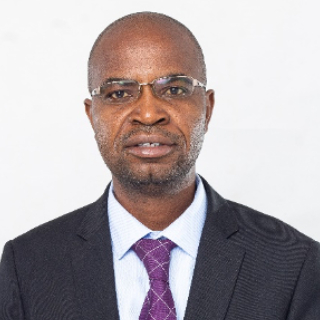
Mr. Bhekimpilo MpofuChairperson
- Welcome
- Background
- Aims
- Mission
- Vision
- Core Values
- Role and Contributions
- Research Clusters
- Why Study with us
Welcome to the Department of Accounting Sciences. The Department was established at the inception of the National University of Science and Technology in 1991. We are thrilled to have you join our vibrant community of students and staff who are passionate about the field of accounting. We look forward to supporting your success!
The Department of Accounting Sciences is an academic unit in the Faculty of Business and Economic Science responsible for providing education and training in the accounting field. The primary functions of the Department of Accounting Sciences include:
- Offering undergraduate and postgraduate degree programs in accounting, such as a Bachelor of Commerce Honours Degree in Accounting and Master of Science degree in Accounting and Finance. These programs provide students with a comprehensive education in financial accounting, managerial accounting, taxation, auditing, and other accounting disciplines.
- Employing Department members who are experts in various accounting specialties. The department's staff members are responsible for teaching accounting courses, researching accounting topics, and publishing in academic accounting journals.
- Maintaining accreditation from organizations like the Association of Chartered Certified Accountants (ACCA) and the Institute of Chartered Accountants of Zimbabwe (ICAZ). Accreditation ensures the department's programs meet rigorous quality standards.
- Hosting guest speaker events, professional development workshops, and other activities to enhance student learning and engagement with the accounting profession.
- Partnering with the local business community to provide internship and career placement opportunities for accounting students.
- Contributing to the overall mission and goals of the larger university by providing high-quality accounting education that prepares students for success in the field.
- Education: To provide quality education, and knowledge in accounting principles, practices, and theories.
- Research: To contribute to the academic literature, develop innovative accounting practices, and address emerging issues and challenges in the profession.
- Ethical and Professional Standards: To instill in students a strong understanding of ethical principles and professional standards that govern the accounting profession.
- Community Engagement and Service: To provide innovative solutions to business problems.
- Remain relevant: To continuously review the curriculum to incorporate emerging trends and technologies in the accounting profession
- Industry Collaboration: To enter into partnerships and collaborate with accounting firms and industry
- Continuing Education: To offer continuing education programs or professional development courses to keep accountants updated with the latest accounting standards, regulations, and practices.
The Department of Accounting Sciences mission is to provide high-quality accounting education that prepares students for successful careers in the accounting profession and develops their skills in financial reporting, management accounting, taxation, auditing, and other accounting disciplines. We are committed to:
- Offering undergraduate and postgraduate degree programs that meet the educational requirements for professional accounting certifications like the ACCA, CIMA, and CIS.
- Conducting innovative research that advances the theory and practice of accounting.
- Fostering close partnerships with the business community to ensure our curriculum and student experiences are aligned with industry needs.
- Promoting ethical behavior, critical thinking, and effective communication among our students.
- Contributing to the broader educational mission of the university through our teaching, research, and service activities.
The Department of Accounting Sciences aspires to be recognized as a leader in accounting education, known for:
- Producing highly skilled and ethical accounting graduates who are in high demand by employers.
- Conducting impactful research that shapes the future of the accounting field.
- Serving as a hub for dialogue and collaboration between the academic and professional accounting communities.
- Providing an inclusive and supportive learning environment that enables all students to reach their full potential.
- Cultivating a culture of continuous improvement and innovation in our curriculum, teaching methods, and student support services.
- Academic Excellence
- Delivering high-quality, rigorous accounting education
- Promoting critical thinking, problem-solving, and lifelong learning
- Maintaining high standards for student performance and learning outcomes
- Encouraging and supporting faculty research and scholarship
- Ethical Conduct
- Instilling a strong ethical foundation and professional integrity in students
- Modeling ethical behavior and decision-making in research, teaching, and service
- Upholding the code of conduct and professional standards of the accounting field
- Cultivating a culture of accountability and responsibility
- Relevance and Responsiveness
- Aligning curriculum and learning experiences with industry needs and best practices
- Fostering close partnerships with the business community and accounting profession
- Adapting to emerging trends, technologies, and regulations in the accounting field
- Providing continuing education and professional development opportunities
- Diversity and Inclusion
- Creating an environment that welcomes and supports students of all backgrounds
- Promoting diversity in the accounting faculty and student body
- Encouraging diverse perspectives and inclusive teaching and research approaches
- Ensuring equity in educational and career opportunities
The Department of Accounting Sciences plays a crucial role in the education and development of aspiring accountants and professionals. Its contribution extends beyond the university setting and has a significant impact on the accounting profession, businesses, and society at large.
- We offer consulting services, financial literacy programs, and tax clinics, among other initiatives that contribute to developing the local business ecosystem and society.
- We promote ethical decision-making, hence the department contributes to the integrity and credibility of the accounting profession.
- Professional Certification Preparation: The Department of Accounting Sciences offers programs that prepare students for professional accounting certifications such a Certified Public Accountant (CPA), Chartered Accountant (CA), Association of Certified Accountants (ACCA), and Certified Management Accountant (CIMA). These programs help students meet the requirements for certification and enhance their career prospects. Employment opportunities: Our students are shining stars both locally and globally.
i) Financial Reporting, Audit & Corporate Governance
This research cluster advances excellence in financial transparency, accountability, and institutional integrity. It examines evolving financial reporting standards, audit quality, assurance practices, and corporate governance frameworks within dynamic regulatory and economic environments. The cluster investigates how high-quality reporting and robust oversight mechanisms strengthen investor confidence, reduce information asymmetry, and enhance organisational performance.
Research spans financial disclosure quality, audit independence, internal controls, board effectiveness, risk governance, and ethical leadership. With growing global scrutiny on accountability and compliance, the cluster also evaluates regulatory reforms and emerging reporting complexities in both public and private sectors. By integrating theory, policy, and professional practice, the cluster contributes evidence-based insights that support sound governance systems, resilient institutions, and sustainable corporate conduct.
Cluster Members:
Lead: Dr. Queen Mpofu
Prof. Favourate Mpofu
Mr. Bhekimpilo Mpofu
(ii) Taxation, Public Finance & Fiscal Policy
This cluster focuses on the role of taxation and fiscal systems in driving sustainable economic development. It explores tax policy design, revenue mobilisation, fiscal decentralisation, public expenditure efficiency, and the equity implications of taxation in developing and emerging economies.
Research examines domestic resource mobilisation, tax compliance behavior, informal sector taxation, digital taxation, and the effectiveness of fiscal instruments in promoting growth and reducing inequality. The cluster also evaluates public finance reforms and the governance of public resources to strengthen transparency and accountability. Through rigorous analysis and policy engagement, the cluster supports evidence-based fiscal strategies that enhance state capacity, macroeconomic stability, and inclusive development.
Cluster Members:
Lead: Mr. Peter Mushure
Dr. Fortune Nkomo
Prof. Favourate Mpofu
(iii) Management Accounting, SMEs & Entrepreneurship
This cluster explores the strategic role of management accounting in enhancing business performance, innovation, and sustainability, particularly within small and medium enterprises (SMEs). It examines costing systems, performance measurement, budgeting, strategic decision-making, and financial planning in entrepreneurial contexts. The cluster investigates how management control systems influence competitiveness, growth, and resilience in resource-constrained environments. Special attention is given to SME development, informal sector enterprises, and entrepreneurial ecosystems that drive job creation and economic transformation.
By bridging accounting practice with enterprise development, the cluster generates actionable insights that strengthen managerial capacity, improve financial sustainability, and support inclusive economic participation.
Cluster Members:
Lead: Mr Sindiso Moyo
Mr Amos Mpofu
(iv) Sustainability Accounting, ESG & Integrated Reporting
This cluster advances research at the intersection of accounting, sustainability, and responsible business conduct. It focuses on Environmental, Social, and Governance (ESG) reporting, integrated reporting frameworks, sustainability measurement, and climate-related financial disclosures. The cluster examines how organisations embed sustainability into strategy, governance, and performance measurement systems. It evaluates the quality, credibility, and impact of non-financial disclosures, as well as the regulatory and market forces shaping responsible reporting.
By aligning accounting systems with sustainable development imperatives, the cluster promotes transparency, long-term value creation, and ethical corporate citizenship. Its work supports businesses and policymakers in strengthening accountability for environmental and social outcomes.
Cluster Members:
Lead: Mr. Ntandoyenkosi Bhebhe
Prof. Favourate Mpofu
Dr. Fortune Nkomo
Mr. Sindiso Moyo
Mr. Bhekimpilo Mpofu
Mr. Peter Mushuresage
(v) Accounting Information Systems, Digital Finance & Forensic Accounting (4IR Technologies)
This cluster explores the digital transformation of accounting and finance in the era of Fourth Industrial Revolution (4IR) technologies. It examines accounting information systems, digital finance platforms, blockchain applications, data analytics, cybersecurity, and forensic accounting practices. Research focuses on how emerging technologies reshape financial reporting, audit processes, fraud detection, risk management, and organisational decision-making. The cluster also investigates the governance, ethical, and regulatory implications of digitalisation in financial systems.
By integrating technology, data science, and accounting expertise, the cluster contributes to building secure, intelligent, and future-ready financial systems. Its work strengthens institutional integrity, enhances transparency, and supports innovation in an increasingly digital economy.
Cluster Members:
Lead: Mr. Amos Mpofu
Dr. Queen Mpofu
Prof. Favourate Mpofu
Mr. Ntandoyenkosi Bhebhe
Mr. Bhekimpilo Mpofu
- Preparation for Accounting Careers:
- The department's degree programs, whether at the undergraduate or postgraduate level, are designed to provide students with the knowledge and skills required for successful careers in the accounting profession.
- The curriculum covers a comprehensive range of accounting disciplines, including financial accounting, managerial accounting, taxation, auditing, and accounting information systems.
- Many programs also incorporate real-world case studies, internships, and other experiential learning opportunities to bridge the gap between academics and professional practice.
- Professional Certification Pathways:
- Accounting degrees from the department can qualify students to sit for professional certifications like the Certified Public Accountant (CPA) exam.
- The department works closely with licensing bodies to ensure its programs meet the educational requirements for these certifications.
- Experienced and Credentialed Department:
- The department employs highly qualified staff members who are experts in their respective accounting specialties.
- Students benefit from the Department's current industry knowledge, cutting-edge research, and dedication to effective teaching methods.
- Networking and Career Support:
- The department maintains close relationships with the local and regional business community, providing students with valuable internship and job placement opportunities.
- Students can also participate in accounting student organizations, attend guest speaker events, and engage with accounting professionals through the department's programming.
- Career services support, such as resume building, interview preparation, and job search assistance, is often available to students through the department.
- Accreditation and Reputation:
- Studying with the Department enhances a student's marketability and opportunities upon graduation.
- By choosing to study with the Department of Accounting Sciences, students can gain a competitive edge in the job market, build a solid foundation for their accounting careers, and benefit from the resources and support of a well-established academic unit.
Our Programmes
Undergraduate
A candidate for the full-time B.Com. Accounting degree shall pursue an approved course of study for not less than four academic years (including one year of industrial attachment) each year constituting a part of the programme except those joining the programme as special entrants and would have worked for a minimum of two years who may complete the programme in two years.
ENTRY QUALIFICATIONS
Candidates must have the following qualifications:-
- Five ‘O’ level passes including English and Mathematics (A, B, or C Grades) At least two ‘A’ level passes.
- A Level passes in at least two of the following subjects: Economics, Management of Business, Accounting and Mathematics.
There is also provision for mature entry for persons who may not have the appropriate academic qualifications for entry but who have suitable or relevant post-school experience and who satisfy the University and the Department of their ability to complete a degree course satisfactorily.
COURSE SYNOPSIS
PART 1- FIRST SEMESTER
CAC 1107 Financial Accounting IA
CIN 1106 Quantitative Analysis for Business I ( Refer to Insurance.) CBU 1108 Principles of Management (Refer to Business Management) CIN 1103 Commercial Law I ( Refer to Insurance.)
CBA 1104 Micro Economics (Refer to Banking)
CBU 1102 Business Communication (Refer to Business Management)
SECOND SEMESTER
CAC 1202 Financial Accounting 1B
CIN 1207 Quantitative Analysis for Business II (Refer to Insurance) CIN 1204 Commercial Law II(Refer to Insurance)
CBA 1205 Macro Economics (Refer to Banking)
CBU 1209 Principles of Marketing (Refer to Business Management) CAC 1203 Introduction to Information Technology
PART II FIRST SEMESTER
CAC 2101 Financial Accounting IIA
CFI 2101 Corporate Finance I (Refer to Finance.)
CAC 2103 Audit Skills
CAC 2104 Information Systems
CAC 2105 Management and Cost Accounting IA
CIN 2106 Company Law I (Refer to Insurance.)
SECOND SEMESTER
CAC 2201 Financial Accounting IIB proceeding to Management and Cost Accounting II.
CFI 2201 Corporate Finance II (Refer to Finance.)
CAC 2203 Audit Process
CAC 2204 Introduction to Taxation
CAC 2205 Management and Cost Accounting IB
CIN 2206 Company Law II (Refer to Insurance.)
PART III
CAC 3001 Industrial Attachment
PART IV FIRST SEMESTER
CAC 4101 Financial Reporting CAC 4102 Taxation I
CAC 4103 Audit Skills, Theory and Practice
CAC 4104 Accounting Information Systems
CAC 4105 Management and Cost Accounting II
CAC 4006 Research Project
SECOND SEMESTER
CAC 4201 Advanced Financial Accounting
CAC 4202 Taxation II
CAC 4203 Advanced Auditing
CAC 4204 Financial Management
CAC 4205 Strategic Management Accounting
CAC 4006 Research Project
Postgraduate
- This programme is designed to enhance and develop the knowledge and skills of accounting in public practice, industry and academia. The degree encompasses studies at an advanced level in finance and managerial accounting, auditing, corporate and international finance and investments.
- Students completing the programme would have studied all the necessary prerequisite courses to apply for associate membership of key Zimbabwean accounting professional bodies such as Institute of Chartered Secretaries and Administrators of Zimbabwe, ACCA, CIMA and CFA.
OBJECTIVES
- To attain an advanced conceptual understanding of the fields of accounting and finance, complemented by a wide range of practical applications and case studies.
- To gain an insight into research methodologies and techniques which extend and support their learning.
- To expose them to the contemporary issues and problems confronting modern accountants and finance specialists.
AIMS
- The programme is tailored to provide accounting professionals with the necessary groundwork required within the accounting field, including the latest standards that represent best practices in the industry.
ENTRY REQUIREMENTS
- For entry into the programme, a candidate must have a good honours degree or equivalent with a pass level of 2.2 or better from a recognised university in accounting and finance related fields. Working experience would be an added advantage.
THE PROGRAMME
- Each course shall be taught for a total of 56 contact hours i.e. seven consecutive days of 8 hours each. Hence each semester shall comprise one intensive block of 28 days inclusive of weekends.
- Formal examinations shall normally be held at the end of each part of the programme.
- Candidates to be admitted to the examination must have satisfactorily attended courses of study including submission of required continuous assessment coursework. They should have also paid the required fees for the programme.
- Examinations shall normally be by way of written papers. However, examiners are at liberty to request any candidate to undergo an oral examination in addition to the written examinations.
- Coursework shall account for 30% of the overall assessment while the formal examination shall account for 70% of the overall assessment.
- The pass mark shall be 50% based on the aggregate of continuous assessment and the examination.
- Students can proceed to the next level carrying previous courses, provided they pass at least
- 50% of the courses in the preceding stage. Students who fail to meet this condition are required to repeat the failed courses prior to proceeding to the next level. Students will not be allowed to proceed to Stage III carrying a Stage I course, neither will they be allowed to proceed to Stage IV (Dissertation stage) carrying any course from the preceding stages.
FAILURE TO SATISFY EXAMINERS
- Supplementary examinations will not be offered.
- A candidate who fails more than 50% of the courses taken in a particular semester may, on the recommendations of Senate, be granted permission to repeat the failed courses. Nevertheless, a repeat student may be exempted from re-attendance and re-examination in any course(s) in which he/she previously passed.
- A candidate who is not allowed to proceed to the subsequent part of the programme and has failed the same part of the programme twice will be required to withdraw from the programme.
- Withdraw means that the candidate must withdraw from the University. Once withdrawn, the student may not apply for readmission until a period of two years has elapsed.
- Appeals against termination of studies shall be handled in accordance with the University’s General Regulations.
MARKING SCHEME
The following marking scheme shall be adopted:
80%+ Distinction
70%-79% Merit
60%-69% Credit
50%-59% Pass
Below 40% Repeat
AWARD OF DEGREE
- To be eligible for the award of the MSc in Accounting and Finance Degree, a student must pass all the courses constituting the programme inclusive of the Dissertation.
- Candidates who pass all the taught courses of the programme, but fail the dissertation twice, shall be awarded the Postgraduate Diploma in Accounting and Finance.
THE PROGRAMME STRUCTURE
Stage I (Core Modules)
- CAC 5101 International Financial Reporting and Analysis
- CAC 5102 Assurance and Management Control
- CAC 5103 Accounting Information Systems and Technology
- CAC 5104 International Governance and Regulation
Stage II (Core Modules)
- CAC 5201 Advanced Financial Accounting
- CAC 5202 Strategic Financial Management CAC 5203 Local and International Taxation CAC 5204 Project Management
Stage III (Core Modules)
- CAC 5301 Advanced International Financial Reporting and Analysis
- CAC 5302 Strategic Managerial Accounting and Performance Management
- CAC 5303 Corporate Finance and Financial Markets
Elective Modules (Choose only one elective)
- CAC 5304 Social Entrepreneurship
- CAC 5305 Treasury Management and Ethics
- CAC 5306 Public Sector Accounting
- CAC 5307 Municipal Accounting
- CAC 5308 Financial Markets Corporate Governance Ethics
Stage IV
- CAC 5300 Dissertation
The Post Graduate Certificate in the Theory of Accountancy (CTA) Programme presented by the National University of Science and Technology(NUST) is accredited by the Institute of Chartered Accountants Zimbabwe (ICAZ) as part of its education requirements to qualify as a Chartered Accountant.
The Chartered Accountant qualification is one of the highest professional accountancy qualifications in Zimbabwe. A Chartered Accountant is an expert in the broad field of Accountancy that includes the following primary subject areas (disciplines): Financial Accounting, External Auditing, Financial Management and Taxation (split slightly differently in the new ICAZ Competency Framework). Chartered Accountants are characterised by their multi-disciplinary approach, analytical ability and systematic and logical approach to problem solving.
The successful completion of the NUST Hons and CTA Programme provides a candidate with admission to the Initial Test of Competence of the ICAZ (previously known as Part 1 of the Qualifying Examination). At postgraduate level we follow a strong student-centred approach, with great emphasis on insight, understanding, application and interdisciplinary interaction, but the successful completion of the Hons and CTA Programme depends on commitment. The Departments presenting the Accounting Sciences strive to mould our students academically in order to become professionally educated Chartered Accountants, (CA(Z)s), and Registered Auditors.
The Hons and CTA Programme is offered on a full-time basis only.
ADMISSION REQUIREMENTS
To be admitted to the full- time ZCTA programme the student:-
a. Must have obtained a 2.1 or better in BComm in Accounting, or an equivalent degree and the degree must be obtained within 5 years as approved by the Faculty Board. This degree must, as a minimum, include the following 4 modules(or equivalent courses): Accounting, Auditing, Management Accounting, Financial Management and Taxation, all at final year level;
AND
b.Must have obtained an average of at least 2.1 in each of Accounting, Auditing, Management Accounting, Financial Management and Taxation in his/her final year. If any of the above-mentioned modules was passed by adjustment or condonement (including through the utilisation of a ‘third opportunity’ exam), then admission will be rejected;
OR
c. The modules referred to in paragraph (b) must have been passed in the immediately preceding year, or the year before that. If any of these modules were passed longer than two years ago, the percentage requirement mentioned in paragraph (b) is increased to 2.1 for each affected subject. If any of these modules were passed longer than three years ago, the student may be required to write an admission test; alternatively will be rejected.
Compulsory modules (full-time only)
RECP671- Advanced Financial Accounting
Module Aim:
This module aims to ensure that students are able to prepare group financial statements in compliance with the regulatory framework and IFRS. In addition students should also be able to prepare financial information for selected special entities. Further it aims to ensure that students are able to evaluate accounting practice with particular reference to capital maintenance, measurement and economic substance over legal form. The changing nature of accounting information as well as current developments is also considered.
RECP672- Advanced Auditing
Module Aim:
This module aims to develop students’ understanding of the critical aspects of managing assurance engagements (including audit engagements): acceptance, planning, managing, concluding and reporting.
RECP673- Advanced Taxation
Module Aim:
This module aims to impart knowledge of the law of taxation and its application to resident and non-resident individuals and entities. In addition to that planning & administration of the tax services and corporate tax compliance matters are also covered. Also this syllabus aims to ensure that the students possess a sound knowledge of the principles of Income Tax, Value Added Tax, and Stamp Duty and are able to apply this knowledge and skills to practical situations.
RECP674- Advanced Management Accounting and Financial Management
Module Aim:
To apply relevant knowledge and skills and exercise professional judgment as expected of a senior financial executive or advisor, in taking or recommending
decisions relating to the financial management of an organisation. This module focuses on the strategic challenges confronting firms that compete in the global
economy. It provides students a forum in which they are able to apply and integrate business theories, practices and skills in a global environment. The course examines the forces that are driving firms to globalise, consequences of globalisation, and examines the managerial implications of globalisation. An understanding of management, marketing, financial and economic principles and concepts are assumed.
Assessment
Candidates must pass the four modules mentioned above to meet the requirements for the Post Graduate Certificate in Theory of Accounting. A candidate will be expected to sit for formal written examination at the end of the year. For a candidate to be admitted to the examination, they must have satisfactorily completed all assignments for continuous assessments. In addition, they are expected to have attended a minimum of 80% of the lectures in each module. The taught component shall be examined by both modulework and a formal written examination. Modulework shall account for 30% of the overall assessment while the
formal written examination shall account for 70% of the overall assessment. The pass mark shall be 50% based on the aggregate of the module work
Test, exam and supplementary examination information (this may change for 2018)
Learners will be required to sit for five tests and one final assessment opportunity(examination) per module, all assessments will be written during the day
Our Staff
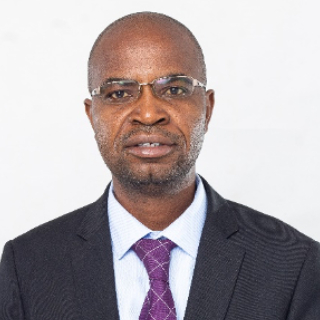
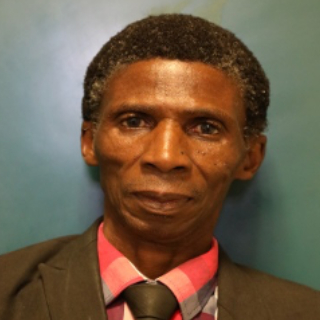
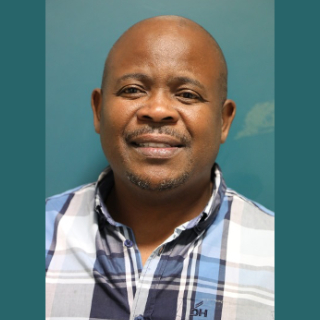
Mr Bhekimpilo MpofuChairperson

Prof. Favourate Y. MpofuProfessor
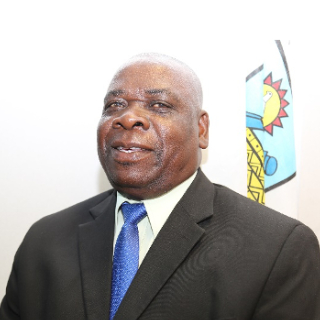
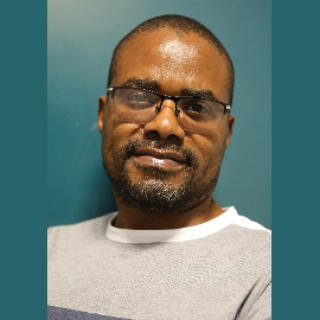
Mr Bonface SibandaSenior Lecturer

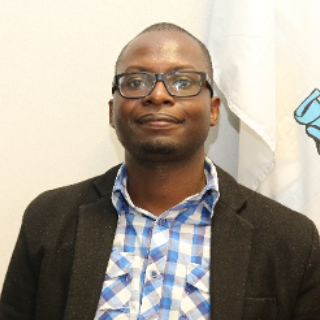
Dr Queen MpofuLecturer