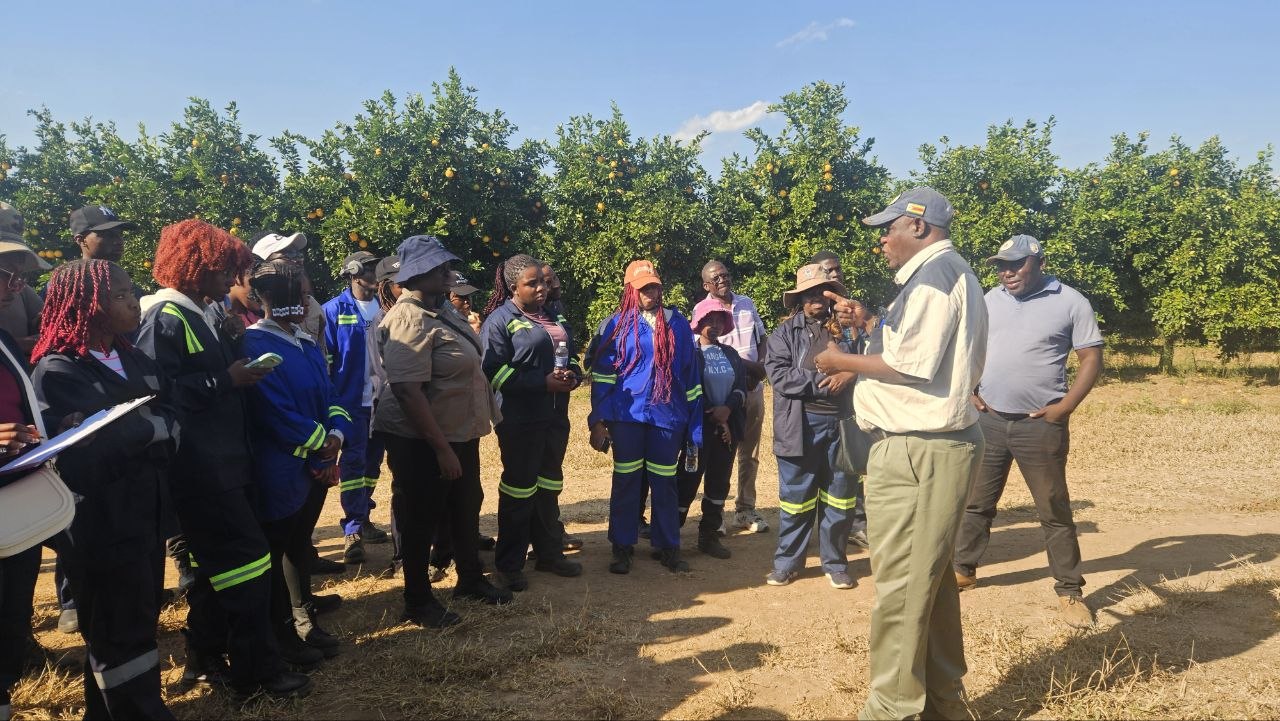
Nottingham Estate Visit
From the Limpopo to the World: Engineering the Citrus Revolution at Nottingham Estate
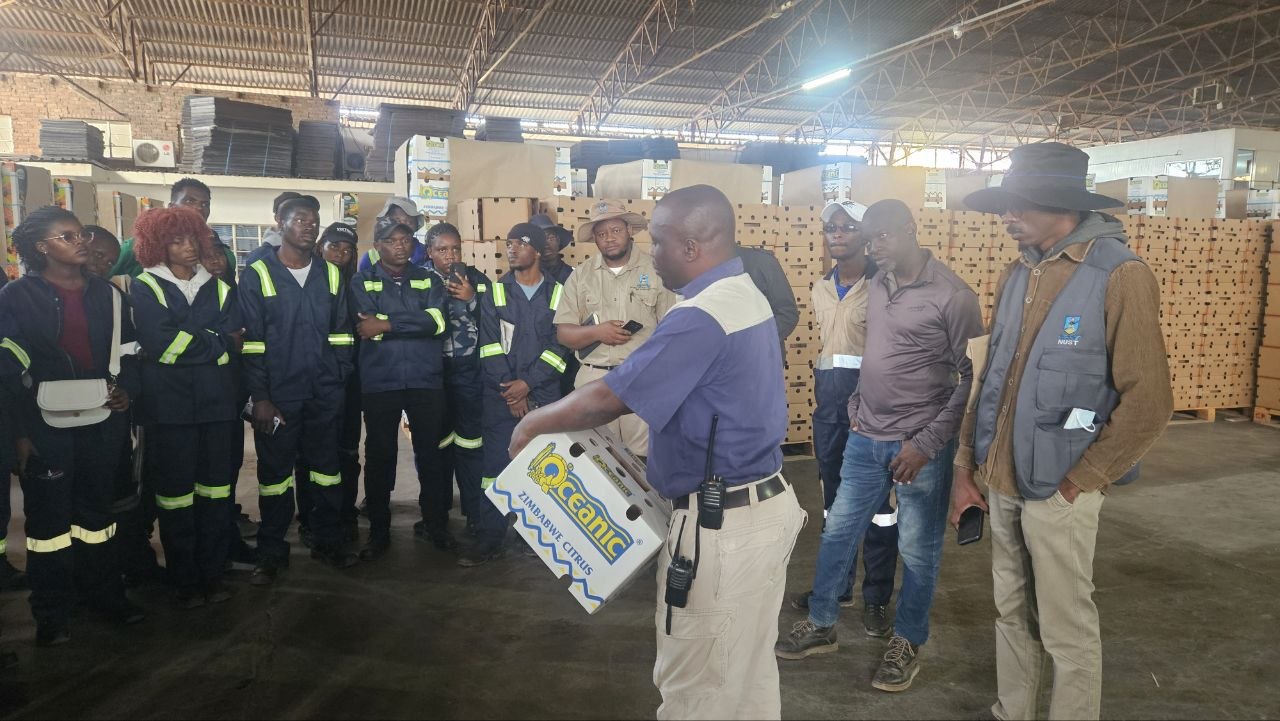
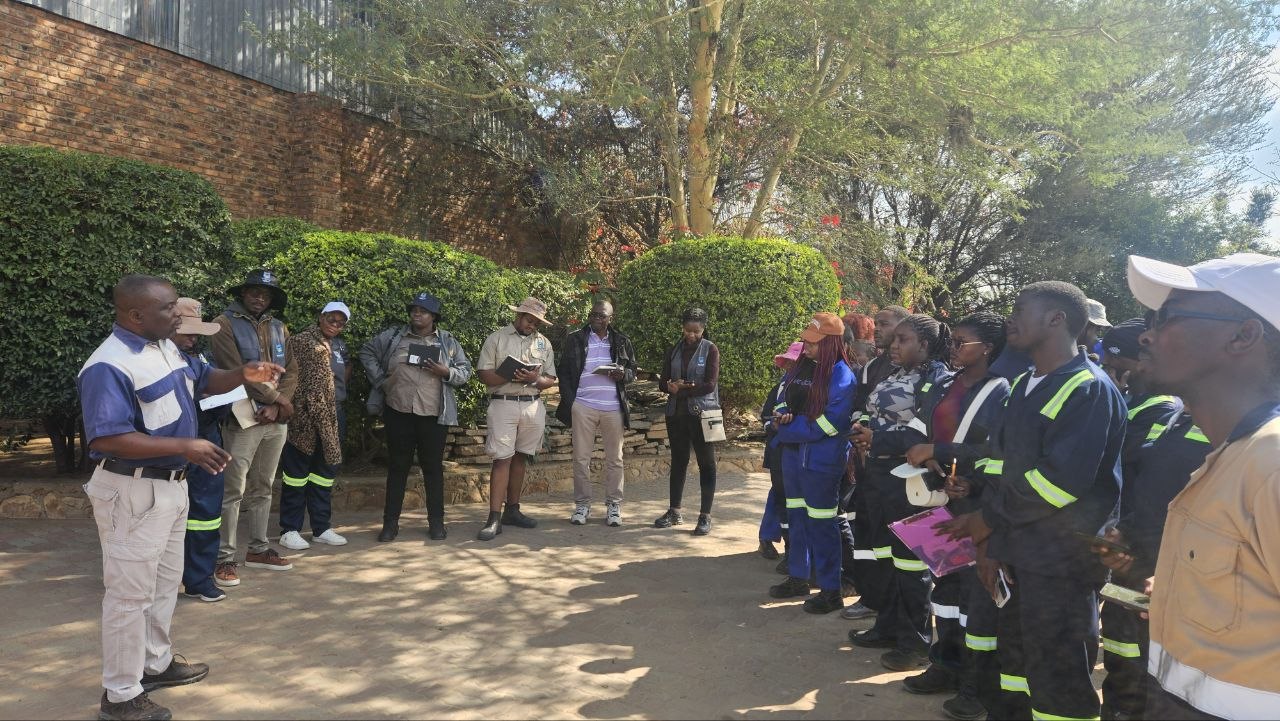
Textbooks give you the formulas, but a field trip to the banks of the mighty Limpopo River shows you what agricultural engineering looks like when it is scaled for the global market. Our department recently traded the seminar rooms for a technical excursion to Nottingham Estate, located just outside Beitbridge. Managing a massive commercial citrus operation in one of the country's most arid regions requires masterful resource coordination, and the estate stands as a phenomenal masterclass in precision automation and water engineering.
We had a first-hand review of the automated grading, storage, transportation, and dual-system irrigation networks that keep this agribusiness thriving.
The Automated Packhouse: Optical Grading and Sorting
Stepping into the main packhouse reveals an incredibly streamlined processing line where manual guesswork has been entirely replaced by machine vision.
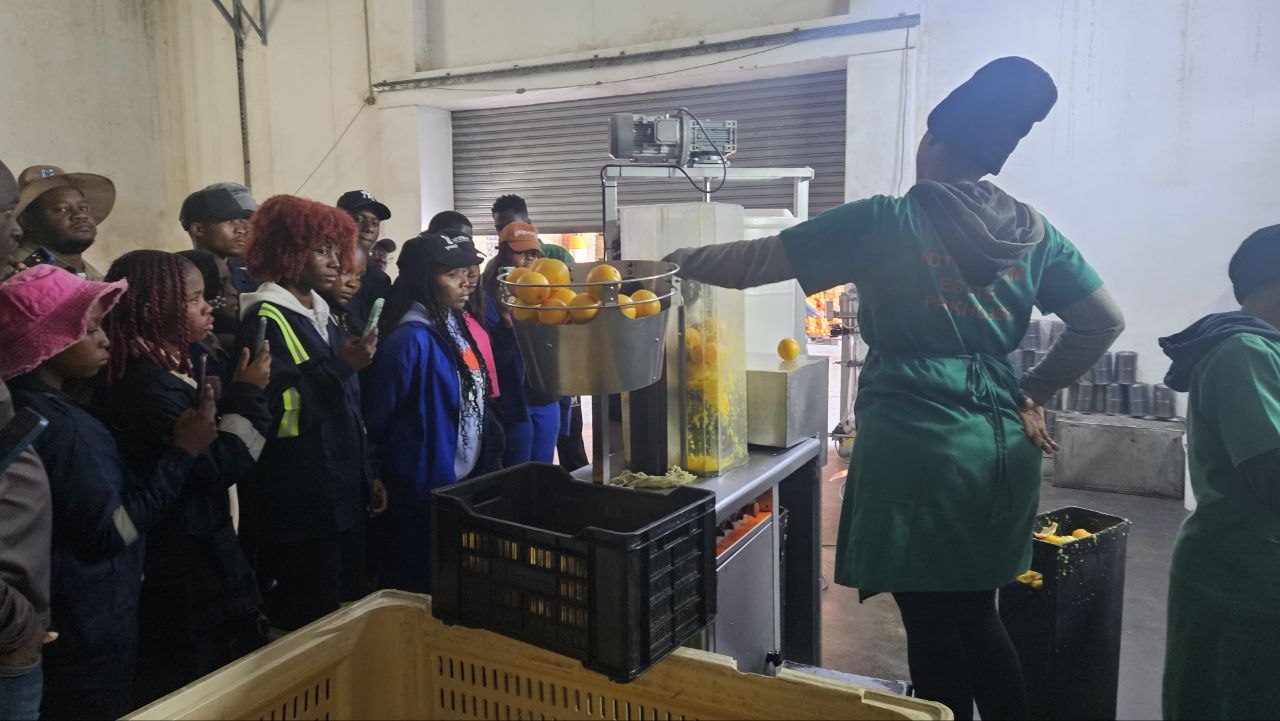
Precision Defect Detection: Once the harvested oranges enter the processing line, they pass through automated washing and waxing stations before hitting the optical grading systems. Advanced multi-spectral cameras rotate and scan every individual fruit in milliseconds, instantly categorizing them based on skin blemishes, colour uniformity, and structural density.
Sizing and Routing: Instead of manual sorting, mechanical drop-gates governed by central control units separate the fruit into exact weight and size brackets. This guarantees that only premium-grade varieties—like the estate's famous Bennie Valencia—are channelled into international export lines bound for the EU, UK, and Asian markets.
Microclimate Engineering: Cold Storage Logistics
Oranges destined for global voyages require meticulous cold-chain management to arrest ripening and maintain structural integrity.
Industrial Cold Rooms: The estate operates massive, highly insulated cold storage rooms powered by a newly integrated solar farm setup to ensure uninterrupted power.
Automated Temperature Control: Programmable Logic Controllers (PLCs) track the internal ambient conditions of the cold rooms. The system automatically modulates the refrigeration compressors to prevent temperature spikes that cause post-harvest spoilage, maintaining the precise humidity and chilling parameters required for long-distance shipping.
Integrated Transportation Logistics
Moving hundreds of tonnes of fruit daily from the orchards to the packhouse, and eventually across international borders, demands a synchronized transport loop.
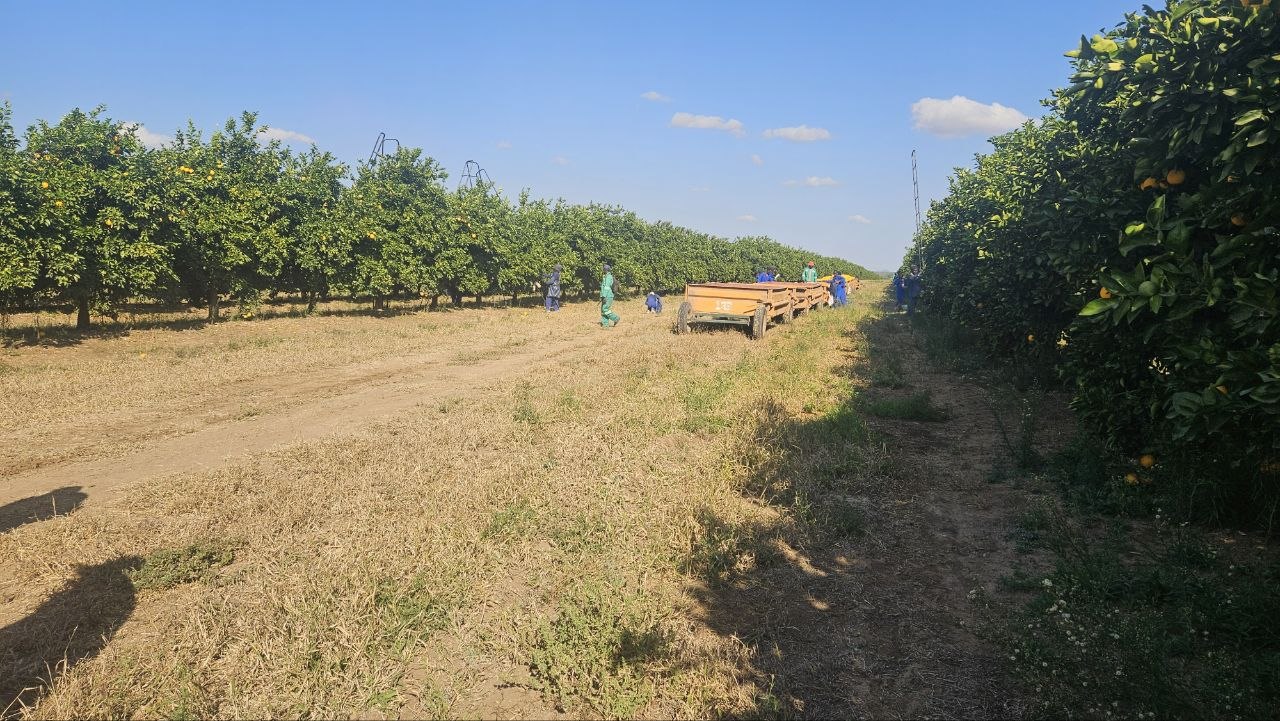
Internal Field Transport: Tractor-drawn trailer networks utilize shock-absorbent suspension layouts to safely carry bulk harvest crates from the orchards without bruising the fruit.
Global Shipping Prep: On the outbound side, automated palletizers wrap and secure export cartons. These are swiftly loaded into refrigerated shipping containers (reefers) using heavy-duty forklifts, ensuring the cold chain remains unbroken from the moment the orange leaves the packhouse until it arrives at a global port.
Dual-System Water Engineering: Drip vs. Sprinkler Irrigation
Operating a massive citrus orchard in Beitbridge's semi-arid environment means every drop of water drawn from the Limpopo River or the estate's major dams must be accounted for. To optimize water use efficiency, Nottingham Estate deploys two distinct irrigation technologies based on topsoil characteristics and tree age:
Targeted Drip Irrigation: Across the primary, mature orchards, the farm utilizes localized drip irrigation lines running directly along the tree bases. This engineering choice delivers water and liquid nutrients directly to the root zones, minimizing evaporation losses under the harsh Beitbridge sun and dramatically cutting down on weed growth between rows.
High-Coverage Sprinkler Systems: On alternative sections of the estate including nursery blocks, sandy terrains, or areas utilizing specific groundcover crops large-scale sprinkler arrays are deployed. These systems are carefully calculated to deliver uniform precipitation patterns, managing soil temperatures and maintaining optimal moisture conditions across broader surface areas.
Key takeaways
The visit to Nottingham Estate highlighted how mechanical automation and environmental control work in unison to build a resilient, export-driven agricultural powerhouse. For our engineering group, seeing how automated sorting machinery, automated cold-storage logic, and tailored irrigation hardware operate under real-world pressures completely re-framed what we can achieve in our upcoming design projects.