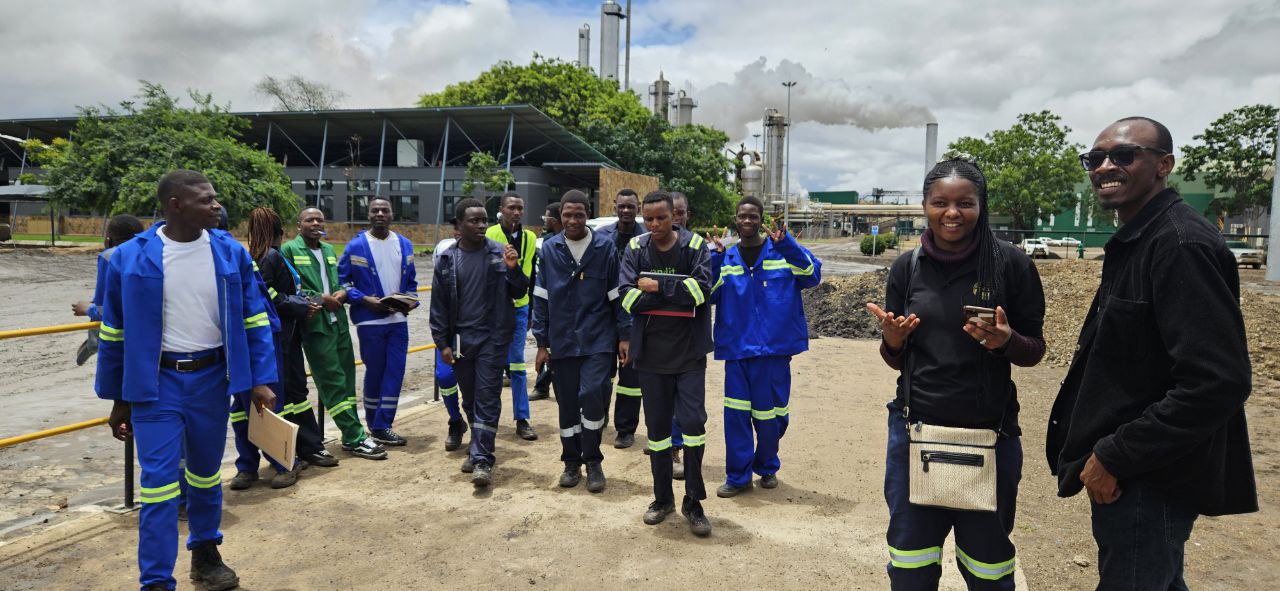
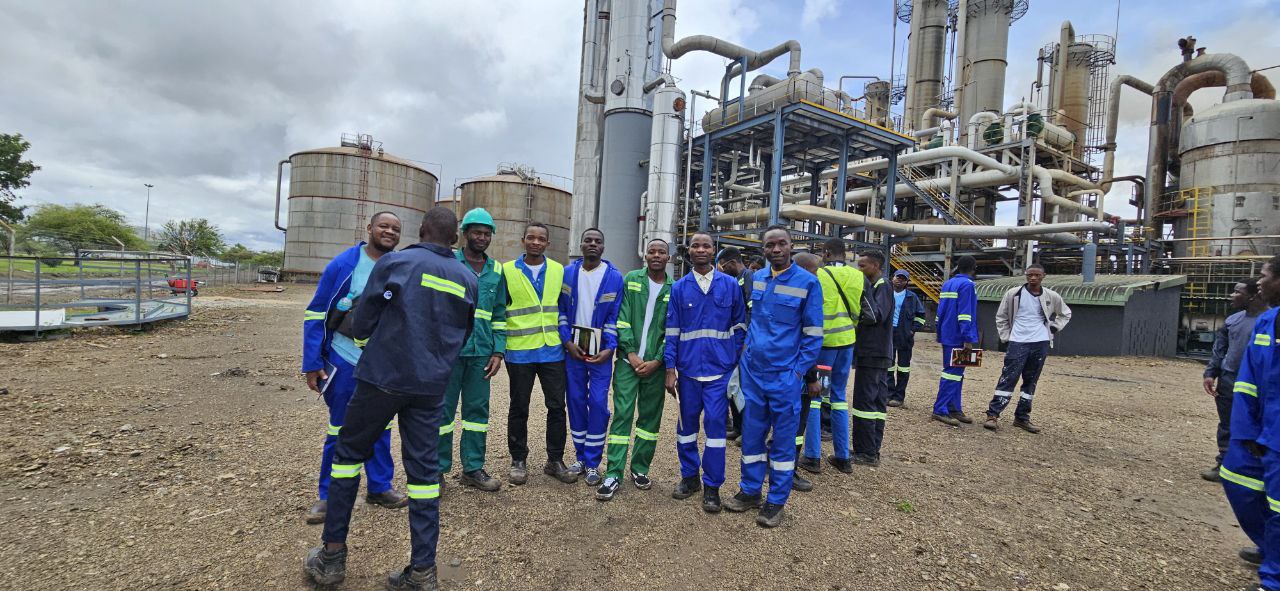
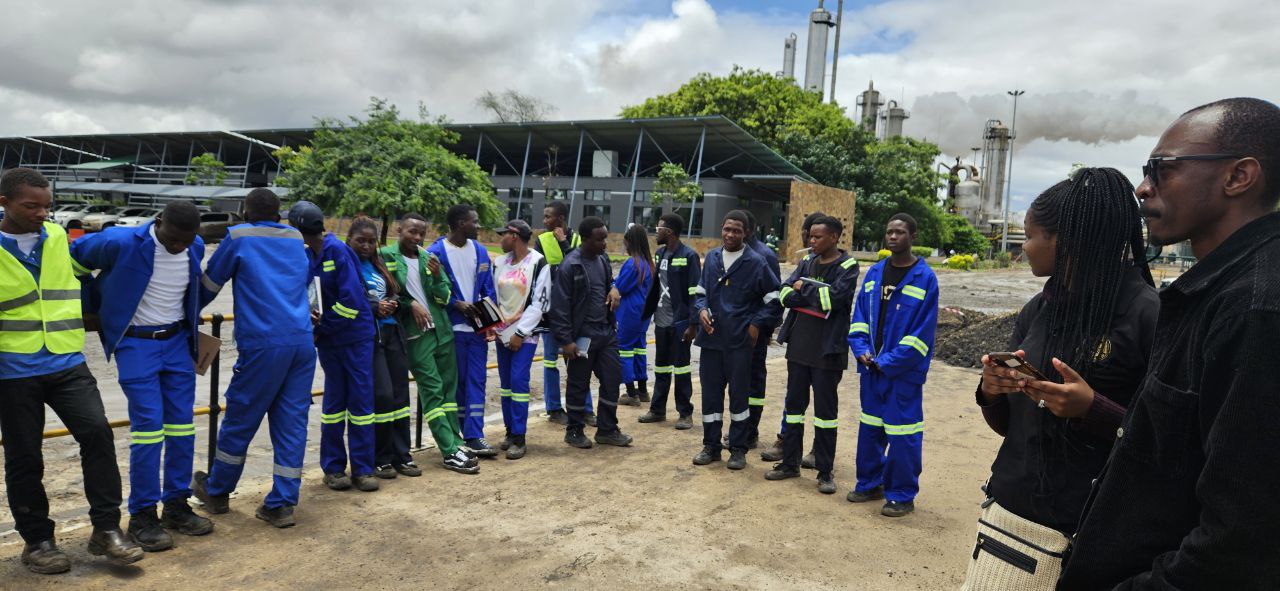
Chisumbanje Field trip visit
From classroom to industry: Agricultural Engineering students visit Green Fuel Chisumbanje
National University of Science and Technology (NUST) Department of Agricultural Engineering students visited Green Fuel in Chisumbanje on 19 November 2025, helping them gain valuable insight into the connection between agricultural production and industrial processing. This trip brought classroom theory to life and highlighted the importance of industrial engagement in preparing students for professional practice.
Learning about ethanol production
One of the key highlights was learning about ethanol production and processing, including sugarcane preparation, milling, fermentation, distillation and dehydration. These stages helped students understand how sugarcane is transformed into ethanol suitable for blending with petrol.
The experience connected coursework in electrical machines, material handling, heat transfer and process control with practical applications. Students also learned how bagasse the fibrous residue remaining after sugarcane juice extraction is used as boiler fuel for energy generation, illustrating the productive use of agricultural by-products.
Bridging theory with practice
The visit broadened students’ understanding of how irrigation, mechanisation, harvesting, equipment maintenance and processing contribute to an integrated agricultural operation. This helped provide students with real world problem and experience to apply the knowledge they attain in class.
Students reflected on challenges such as improving water-use efficiency, reducing machinery downtime and coordinating field operations with factory requirements. The experience reinforced the importance of considering safety, reliability and operating costs alongside technical performance.
Collaboration and internship opportunities
The trip also highlighted possibilities for future collaboration between the students’ institution and Green Fuel. Potential areas included joint research, industry supported final year projects, technical workshops and knowledge exchange, particularly in irrigation efficiency, machinery reliability and energy management.
Internships and industrial attachments were identified as opportunities to extend learning through supervised practical work. Such placements could help students develop technical skills and a deeper understanding of workplace responsibilities, subject to availability and agreement with the company.
Overall, the visit strengthened the link between academic learning and industry practice, giving students a clearer perspective on ethanol processing and the contribution of Agricultural Engineering to agricultural production and resource efficiency.