
Zimplats Ngezi Mine - Class of 2026
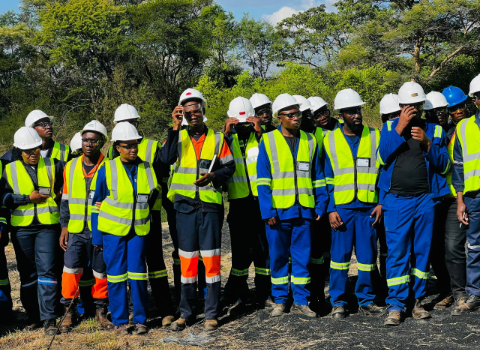
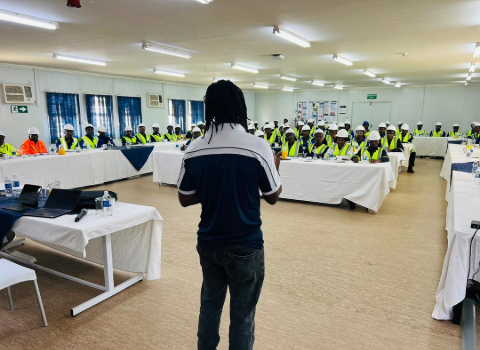
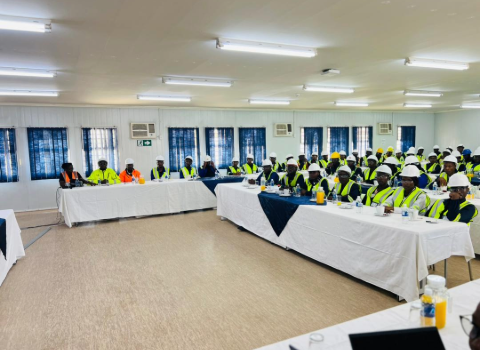
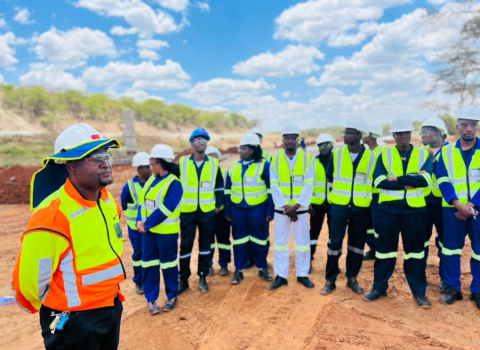
The Civil and Water Engineering Class of 2026 embarked on an educational tour to Zimplats Ngezi Mine, gaining direct exposure to one of Southern Africa’s most capital-intensive and technically advanced industrial operations. The visit provided a multidisciplinary perspective on large-scale infrastructure, integrating geotechnical, structural, hydraulic, environmental, and urban engineering in a single complex system.
A central highlight was the geotechnical case study of the 2014 Bimha Mine collapse. Students examined how a low-angle shear triggered pillar failure and how engineers redesigned the mine layout by reducing extraction ratios to improve long-term stability. They observed extensive support systems, including cable anchors, roof bolts, and tendons, within the Main Sulphide Zone of the Great Dyke. The use of real-time seismic monitoring systems and extensometers demonstrated how continuous data collection now safeguards against cascading failures.
 |
 |
In materials handling and structural engineering, students studied the 7 km overland conveyor system, focusing on its structural steel supports, the ST-880 steel cord belt, and the Rock Box transfer principle used to minimise abrasion from platinum ore. At the smelter expansion and third concentrator module, attention was given to foundation design under dynamic loading from vibrating mills and 38 MW furnaces. Concrete durability strategies designed to withstand acidic and high-temperature environments reinforced the importance of material performance in metallurgical facilities.
Water engineering and stewardship were equally prominent. At Chitsuwa Dam, a 30,500 ML earth-fill structure, students reviewed embankment stability principles and the 24 km bulk water pipeline supplying the mine. The operation’s closed-loop recycling philosophy illustrated how thickener overflow and treated sewage are reused in processing plants. The Turf sewage recycling initiative, which repurposes over 2,000 ML annually, provided a practical example of sustainable industrial water management in a water-scarce region.
The tour also explored urban engineering through the development of Turf Village. Students assessed township reticulation systems for water and sewer networks, pavement layer works designed for heavy mining traffic, and the integrated delivery of clinics, schools, and community facilities under design-build contracts. This demonstrated how infrastructure planning extends beyond extraction to support social sustainability.
A visit to the SMC Tailings Storage Facility offered critical insight into tailings dam engineering. Students analysed seepage control systems including blanket and finger drains that maintain a low phreatic surface to prevent structural instability. The spigot deposition method used to distribute slurry evenly across the dam beach highlighted operational strategies that enhance strength and safety.
The Zimplats tour provided the Class of 2026 with a strategic understanding of how civil and water engineering principles operate at industrial scale. It reinforced the responsibility engineers carry in designing resilient systems that protect people, resources, and the environment.
 |
 |