
Civil and Water Engineering Class of 2028 Visits Lake Chivero
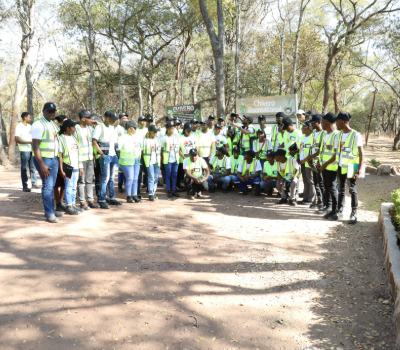
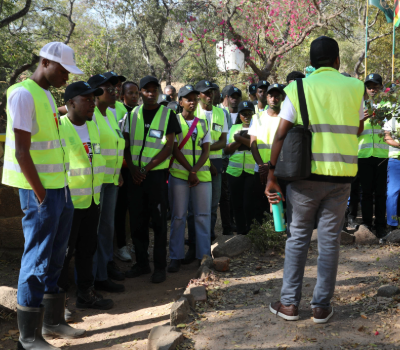
The Civil and Water Engineering Class of 2028 undertook a field visit to Lake Chivero, deepening their understanding of reservoir management, water treatment, and catchment sustainability within Harare’s urban water supply system. As a reservoir commissioned in 1952, Lake Chivero remains central to the city’s water security, yet it operates under increasing environmental, demographic, and climatic pressures. The visit positioned students at the intersection of theory, operations, and policy.
A critical focus was on advanced eutrophication dynamics and nutrient loading. Students examined how phosphorus and nitrogen inputs from upstream wastewater discharges continue to drive persistent algal blooms. Beyond understanding hypereutrophic conditions, the class analysed how bloom events affect dissolved oxygen levels, taste and odour compounds, and chemical dosing requirements at Morton Jaffray Water Works. Operational discussions extended to the economic implications of higher alum demand, increased sludge production, and the strain placed on filtration systems during peak contamination periods.
At the treatment facility, the cohort revisited the conventional treatment train but with deeper analytical engagement. They evaluated real-time process monitoring, including turbidity control, pH optimisation during coagulation, and backwashing cycles in rapid sand filters. Emphasis was placed on process efficiency, plant resilience during shock loads, and the balance between chemical optimisation and cost control. Students also reflected on how ageing infrastructure influences plant reliability under fluctuating raw water quality conditions.
Reservoir sustainability formed another dimension of learning. Through updated bathymetric mapping data, students assessed ongoing sedimentation trends and their implications for live storage capacity. Discussions expanded to climate variability, altered rainfall patterns, and the increasing unpredictability of inflows. This introduced broader conversations on adaptive reservoir operation strategies and integrated catchment rehabilitation as long-term risk mitigation measures.
From a hydrological systems perspective, the class critically evaluated Lake Chivero’s position downstream of Harare’s urban discharge points. They compared its vulnerability to pollution with upstream, less-developed catchments and examined how diversification of water sources strengthens overall supply resilience. The calculation and interpretation of safe yield were revisited within the context of extended drought scenarios and growing urban demand.
The 2028 visit moved beyond observation into strategic analysis. Students were challenged to think in terms of lifecycle management, catchment governance, infrastructure rehabilitation, and sustainable abstraction. The experience reinforced a defining principle of civil and water engineering: sustainable urban water supply depends not only on treatment technology, but on disciplined catchment management, infrastructure stewardship, and long-term systems planning.
 |
 |